
For many families, going to the doctor is just part of the routine. But for parents of children with autism, preparing for a doctor visit can feel anything but routine.
If your child has ever felt anxious or had a hard time getting through an appointment, you’re not alone. The encouraging news is that with the right preparation, these visits can become much smoother over time.
Preparing a child with autism for a doctor visit can be easier with visual schedules, social stories, practice at home, and clear expectations. These tools help reduce anxiety and improve cooperation.
Why Medical Visits Can Be So Challenging
Children with autism often do best when they know what to expect. Medical visits, however, are full of unknowns. You might wait an unpredictable amount of time, get called back suddenly, or move through several unfamiliar procedures in a short period.
There’s also the sensory component. Equipment can make unusual noises, rooms can feel small or sterile, and providers may wear masks or use tools that look intimidating. On top of that, many parts of an exam involve close physical interaction, which can be uncomfortable if your child isn’t prepared for it.
When all of this comes together, it makes sense that even routine visits can feel stressful.
Using Visual Schedules and Social Stories for Doctor Visits
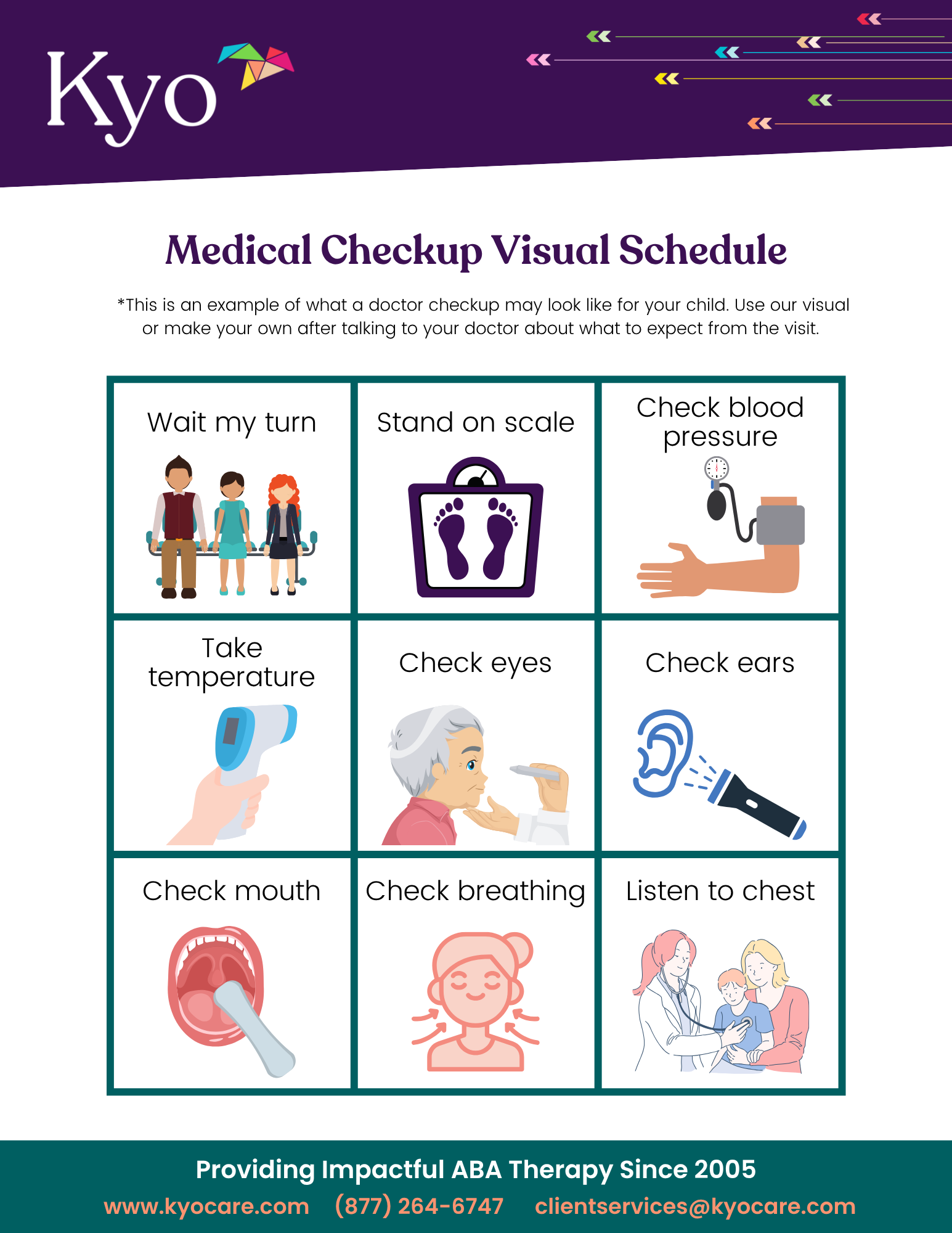
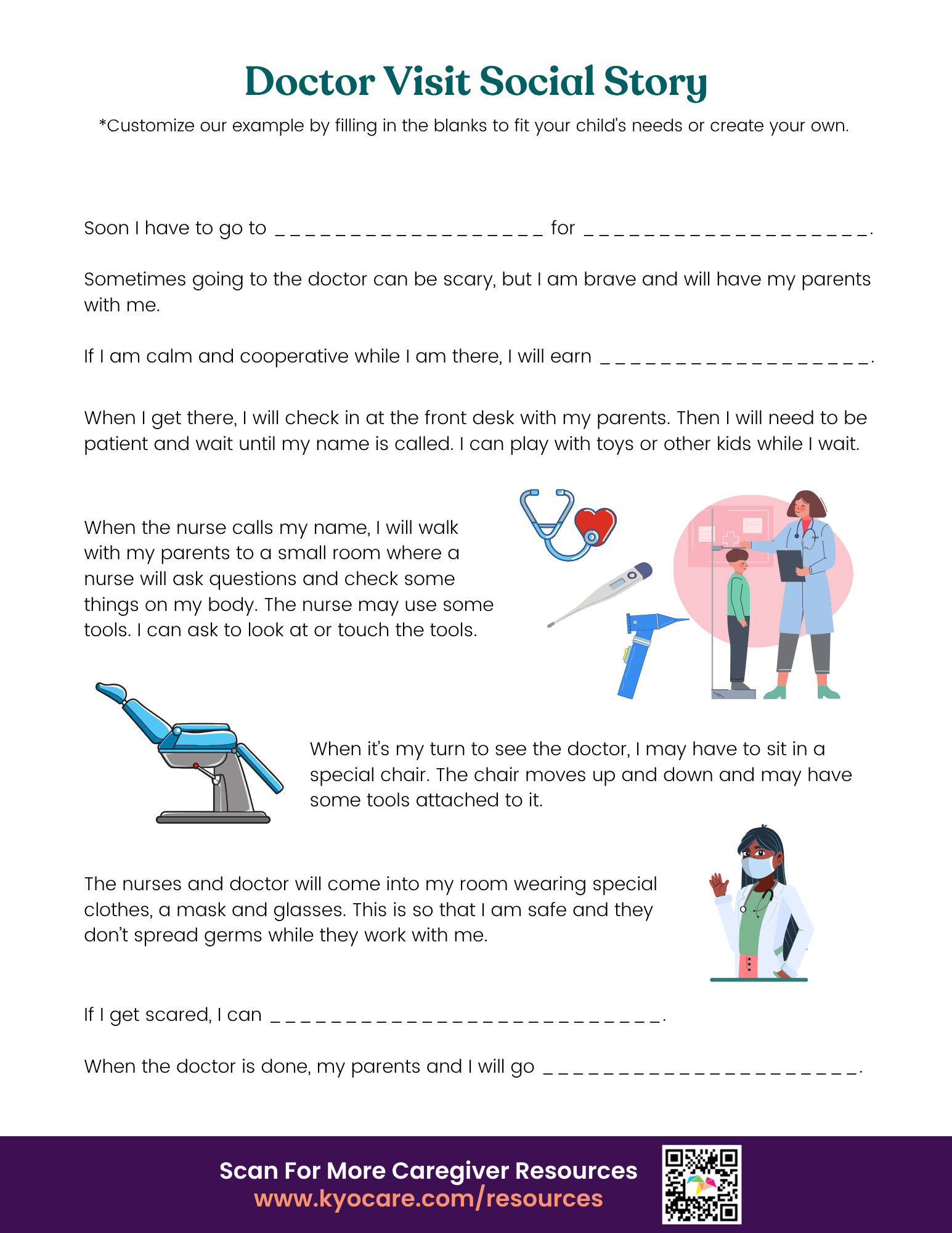
To make medical visits more predictable, consider using visual supports and social stories in the days leading up to your child’s appointment. To make this easier for families, we’ve created a printable Medical Checkup Visual Schedule and Social Story that is free to download and can be personalized to best meet your child’s unique needs.
The visual schedule shows common parts of a checkup, such as waiting, standing on a scale, getting blood pressure taken, and having ears and eyes checked, in a clear, step-by-step format. This helps your child see what’s coming next and understand that the visit has a beginning, middle, and end.
The included social story walks through the experience in a reassuring, child-friendly way. It explains things like checking in at the front desk, waiting to be called, and meeting the nurse and doctor. It also reminds your child that you’ll be there with them, that medical staff wear special clothing to keep everyone safe, and that it’s okay to feel nervous.
There are also spaces to personalize the story—like where you’re going, what the visit is for, what your child can do if they feel scared, and what they’ll earn afterward for trying their best.
How to Prepare Your Child with Autism for a Medical Visit
To get the biggest benefit from this resource, it helps to introduce it ahead of time rather than right before the appointment.
- Learn what to expect and personalize the materials
If you can, call your child’s doctor and ask what typically happens during that type of appointment. You can also talk with the doctor in advance about your child’s specific needs and sensitivities, and ask whether any potentially stressful steps can be skipped if they aren’t medically necessary (for example, using a tongue depressor when your child isn’t sick). Then customize the visual schedule and fill in the social story so it reflects what your child will actually experience. The more specific it is, the more meaningful it will be. - Review it together ahead of time
Start reading the story a few days before the visit, not just the morning of. Go through it once or twice a day in a calm, reassuring way. Let your child ask questions and talk through each step so it starts to feel familiar. - Practice at home
Try some simple role-play. You might take turns being the doctor, practice stepping on a “scale,” or pretend to check ears and heartbeat. If you have a toy doctor kit, even better. Practicing in a comfortable environment can help reduce anxiety later. You can also explore more strategies for priming children for medical appointments on the Autism Speaks website. - Plan for coping strategies
Think ahead about what your child can do if they feel nervous. Maybe it’s taking deep breaths, holding your hand, or asking for a break. You can even write this into the social story so they know exactly what to do in the moment. - Bring the visual schedule to the appointment
Having the schedule with you helps reinforce what’s happening. As each step is completed, you can show your child what’s done and what’s next. This gives a sense of progress and makes the visit feel more predictable. - Follow through with reinforcement
Before the visit, decide on a reward your child is excited about. Afterward, make sure to follow through with it. This helps build positive associations and makes future visits easier.
Small Steps Lead to Big Progress
Medical visits may never be your child’s favorite activity—and that’s okay. The goal isn’t perfection, but progress. With preparation, clear expectations, and support, many children become more comfortable over time.
Even small wins matter and should be celebrated. Maybe your child tolerates one new step, waits one minute longer, or uses a coping strategy independently. Those moments build confidence and make the next visit easier.
If you’re looking for more support in helping your child navigate situations like medical appointments, ABA therapy can provide practical strategies tailored to your child’s needs. At Kyo, we partner with families to build skills that make everyday experiences more manageable.
Download our printable Medical Checkup Visual Schedule and Social Story: