In-home ABA therapy helps children with autism build meaningful skills within the routines and environments they experience every day. By working in the home, therapists can partner closely with caregivers and support children in applying skills during real-life moments.
Below, we walk through how in-home ABA therapy works and why it may be a good fit for some families.
What Is In-Home ABA Therapy?
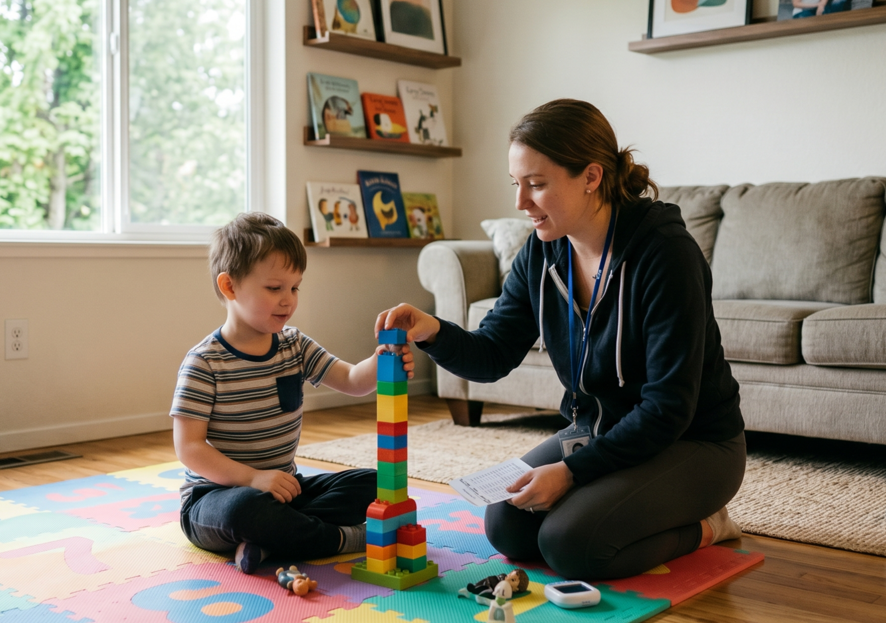
In-home ABA therapy is Applied Behavior Analysis delivered in a child’s home, focusing on skills that support daily life. A trained therapist works one-on-one with your child to build communication, social, behavioral, and daily living skills using individualized strategies.
Because therapy takes place at home:
- Skills are taught in real-life situations
- Therapists can observe and support daily routines
- Caregivers have more opportunities to be involved
How Is In-Home ABA Therapy Personalized for Your Child?
In-home ABA therapy is individualized based on your child’s strengths, needs, and daily routines. This allows therapy to focus on skills that are meaningful and relevant to your child’s life.
Therapists may:
- Build goals around moments like getting ready for school, cleaning up toys, or transitioning off of a tablet
- Use your child’s interests (like trains, animals, or favorite shows) to motivate communication and participation
- Adjust strategies based on what is working in the home environment
- Provide caregiver coaching during sessions
This approach supports:
- Steady skill development
- Improved use of skills over time
- Progress that feels relevant to daily life
Why Does Learning at Home Improve Outcomes?
Children often learn and use skills more easily when they are taught in familiar environments. In-home ABA therapy uses everyday activities as opportunities for learning.
Examples include:
- Asking for “more” or “all done” during snack time instead of reaching or crying
- Practicing putting on socks or choosing pajamas as part of the bedtime routine
- Taking turns during a board game or asking a sibling to join in play
This approach, often called natural environment teaching (NET), helps children connect new skills to real-life situations.
How Does In-Home ABA Therapy Support Families?
Caregiver involvement is an important part of ABA therapy, and in-home services make collaboration more accessible.
During sessions, caregivers can:
- Watch how the therapist prompts your child to request help or follow directions
- Practice guiding your child through a real moment (like preparing a snack or taking turns with a toy)
- Ask questions in the moment when something isn’t working and receive immediate, practical feedback
This collaborative approach helps caregivers:
- Feel more confident supporting their child
- Reinforce skills throughout the day
- Build consistency across routines
Is In-Home ABA Therapy More Convenient?
In-home ABA therapy can reduce some of the logistical challenges families face when accessing services. Sessions take place in your home, which can make scheduling and participation more manageable.
Potential benefits include:
- No travel to and from a clinic
- Therapy can happen during real parts of your day – not added as a separate activity
- Fewer missed sessions due to scheduling challenges
- Your child learns in a space where they already feel safe, reducing time spent adjusting to a new environment
How Does In-Home Therapy Build Independence?
In-home ABA therapy focuses on building independence by teaching skills where they naturally occur.
For example:
- Choosing clothes and getting dressed with less prompting in their own room
- Sitting at the table, using utensils, or cleaning up after meals
- Following a visual schedule to move from playtime to bedtime with fewer reminders
Practicing skills in context can help children:
- Use skills more independently
- Apply them in other settings over time
- Maintain progress across routines
How Does In-Home ABA Support Collaboration With Other Providers?
In-home therapy can support coordination across your child’s care team. Therapists gain insight into how your child functions day to day, which can inform collaboration with other providers.
This may include:
- Teachers
- Speech therapists
- Occupational therapists
- Pediatricians
Collaboration helps create:
- More consistent strategies across settings
- Clear communication between providers
- A more comprehensive approach to care
Why Is Generalization Easier With In-Home ABA?
Generalization—using skills across different settings—is a key goal of ABA therapy. In-home services support this by teaching skills within the environments where they are naturally used.
Because of this:
- Skills are practiced in the exact moments they’re needed (not just in structured sessions)
- Therapists can step in when challenges happen, like transitions, refusals, or frustration
- Skills are reinforced through repeated use in a variety of daily situations
This can support:
- More consistent use of skills
- Greater flexibility across environments
- Long-term skill maintenance
Is In-Home ABA Therapy Right for Your Family?
In-home ABA therapy is one option for families seeking a personalized approach to care. It may be a good fit for children who benefit from learning in familiar environments and for families who want to be closely involved in the therapy process.
Each child is different, and the right service model depends on your child’s strengths, needs, and goals.
Recommended Resources for Parents
- The PRT Pocket Guide: Pivotal Response Treatment for Autism Spectrum Disorders
- The Early Start Denver Model for Young Children with Autism
- More Than Words® – The Hanen Program® for Parents
You can also explore resources from the CDC and NIH for more information on autism and early intervention.
FAQs: Parents Also Ask
Is in-home ABA therapy as effective as center-based therapy?
Both approaches can be effective, but in-home ABA therapy offers unique advantages by teaching skills within your child’s everyday routines and environment. This often leads to stronger carryover of skills and more consistent caregiver involvement.
While center-based therapy may offer structured access to peer interactions, in-home therapy can support social skill development in more natural ways—practicing things like playing cooperatively with a sibling, greeting a neighbor, or joining in with other kids during playtime at the park. This allows children to build and use social skills in the same settings where they naturally occur.
How many hours of in-home ABA therapy does my child need?
The number of hours is based on an individualized assessment. Recommendations consider your child’s age, developmental needs, and specific goals.
Do caregivers need to be present during sessions?
Caregiver participation is encouraged but may vary. Many programs include time for observation, practice, and coaching to support consistency outside of sessions.
What skills are typically addressed in in-home ABA therapy?
Common areas include communication, social interaction, daily living skills (such as dressing or eating), and behavior regulation.
How do children use skills learned at home in other settings?
Skills taught in the home are practiced within real routines, which can make it easier to use them in school and community settings. Therapists also plan for practice across environments.
Next Steps
If you’re considering ABA therapy, our team at Kyo is here to answer questions and support you in every step of your journey. Connect with us today to learn more about in-home ABA or enroll your child.